Ehime Alex
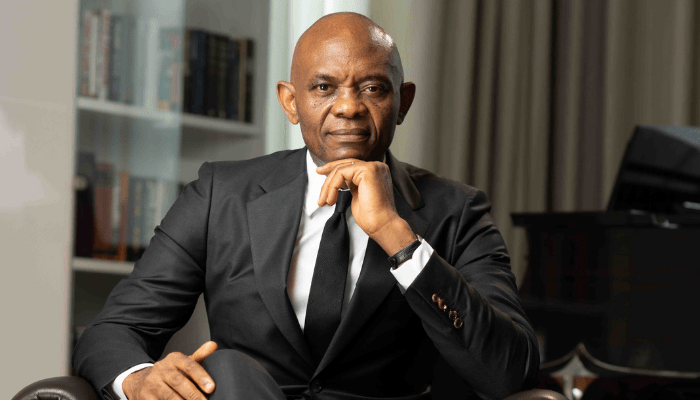
TONY Elumelu, chairman of Heirs Holdings, has called for increased investment of African capital in the continent’s businesses, saying reliable electricity, local value addition and stronger regional trade are critical to unlocking Africa’s economic potential.
Delivering a keynote address at the 25th annual conference of the Women in Management, Business and Public Service (WIMBIZ) in Lagos on November 6, Elumelu said Africa must rely less on foreign aid and mobilise domestic savings and investment to finance its development.
He argued that the continent’s growing working-age population, mineral resources, agricultural potential and expanding consumer market present a major commercial opportunity, but warned that these advantages would not automatically translate into prosperity.
“The most important thing Africa needs to build in the next decade is African capital that invests in Africa,” he said.
Elumelu said African pension funds, insurance companies, banks and family offices must play a greater role in financing businesses and infrastructure across the continent.
He identified unreliable electricity, limited local processing of raw materials and inadequate access to capital as major constraints to Africa’s industrial development.
According to him, African countries must move beyond exporting raw materials such as lithium, cocoa and crude oil and invest in processing, refining and branding them locally to capture more economic value.
He also called for stronger regional trade, noting that less than a fifth of Africa’s trade takes place within the continent.
He said the African Continental Free Trade Area would remain largely ineffective without investments in roads, railways, ports, payment systems and efficient customs procedures.
“A continent that cannot trade efficiently with itself will struggle to negotiate effectively with the rest of the world,” he said.
On inclusive economic growth, Elumelu highlighted the role of women entrepreneurs, arguing that excluding women from economic leadership weakens the continent’s competitiveness.
He said he and his wife, Awele Elumelu, had invested more than $120 million in 24,633 young entrepreneurs across all 54 African countries through the Tony Elumelu Foundation over 15 years.
Women account for 48 per cent of the beneficiaries, while the entrepreneurs have collectively created more than 1.5 million jobs and generated more than $4.2 billion in revenue, he said.
However, the foundation could fund only 3,200 of the 265,529 young Africans who applied to its programme this year, leaving more than 262,000 applicants without support.
Elumelu described the gap as evidence of the shortage of capital available to promising African entrepreneurs, rather than a lack of business ideas.
“This year, 265,529 young Africans with groundbreaking business ideas applied to our programme. We could only fund 3,200 — just one in every 83 applicants,” he said.
He added that women’s participation in economic leadership should be treated as a business and competitiveness priority, rather than simply a matter of fairness.
Elumelu also urged African governments to strengthen institutions and create predictable business environments, saying investors are more likely to commit capital where contracts are honoured, regulators are consistent and courts function effectively.
“Capital goes where it is safe, and it stays where it is respected,” he said.
He urged private sector leaders to promote merit, ensure transparency and strengthen corporate governance, arguing that institutional development was also a responsibility of businesses.
Elumelu cited the leadership roles held by women across companies within Heirs Holdings and the United Bank for Africa Group as evidence of the contribution women can make when given opportunities.
He said the private sector and African governments must work together to ensure that the continent’s resources and growing population translate into shared prosperity.
“No one but us will develop Africa. Not the donors. Not the multilaterals. Not the partners, however welcome they are. Us,” he added.