Power Plants run at 86% capacity as DisCos recover 74.9% revenue-NERC
18
NERC logo for illustration purposes
Harrison EDEH
NIGERIAN grid-connected power plants utilised an average of 86 per cent of available generation capacity in August 2026.
Accordingly,the electricity distribution companies (DisCos) recovered only 74.91 per cent of the revenue allowed under their tariffs in July, data from the Nigerian Electricity Regulatory Commission (NERC) factsheets sheets.
The two factsheets provide a snapshot of different ends of the electricity value chain, with the August operational data showing relatively high utilisation of available generation capacity, while the July commercial data highlight significant gaps in billing, customer collections and revenue recovery by the 11 DisCos.
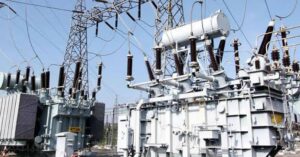
An illustrative picture of a power plant in Nigeria
According to NERC, an average of 4,758 megawatts (MW) of generation capacity was available for dispatch in August, while average hourly generation stood at 4,102MW, translating to an 86 per cent load factor, which measures the proportion of available generation capacity that is actually utilised over a given period.
In a statement on its X handle on September 23, NERC said the August 2026 Operational Performance Factsheet “breaks down how Nigeria’s grid-connected power plants performed during the month.”
“Average Available Capacity: An average of 4,758 MW was available for dispatch during the month. Average Load Factor: 86%, showing that 4,102 MW of the available generation capacity was utilised on average.”
A review of the Factsheets by the Advocates Times shows that the strong utilisation was led by some of the country’s major power plants.
Afam_2 recorded a 99 per cent load factor, meaning it generated almost all of the electricity its available capacity could produce during the period. Kainji_1 recorded 98 per cent, while Egbin_1 posted 96 per cent. Ihovbor_2 recorded 92 per cent.
Olorunsogo_1, Omoku_1 and Igbafo_1 operated at 100 per cent of their available capacity, while Trans Amadi_1 recorded an effective 100 per cent load factor after the System Operator directed it to maximise output above its declared availability for grid stability.
However, the generation figures came alongside breaches of prescribed grid operating limits. The lowest recorded grid frequency was 49.34 hertz (Hz), while the highest was 50.67Hz, outside the target range of 49.75Hz to 50.25Hz.
The Advocate Times can report that grid frequency measures the rate at which alternating current cycles and is an important indicator of the balance between electricity supply and demand.
The factsheet also recorded monthly voltage levels of between 302.29 kilovolts (kV) and 349.68kV, outside the prescribed operating range of 313.50kV to 346.50kV.
The operational picture also showed that some plants were completely inactive during the month. Sapele_2, Alaoji_1, Geregu_2 and Ibom power_1 each recorded zero available capacity and zero generation.
At the distribution end, the July factsheet showed that DisCos received electricity valued at ₦333.94 billion but billed customers ₦250.79 billion, putting overall billing efficiency at 75.10 per cent.
Billing efficiency measures how much of the energy received by a DisCo is ultimately billed to customers, and the remaining gap reflects energy that was not billed and associated technical or commercial losses.
NERC said on its X handle on September 24 that the July factsheet “breaks down the financial health and efficiency of the Distribution Companies (DisCos) across the country.”
The regulator said billing efficiency “stood at 75.10%, with total energy billed reaching ₦250.79bn out of ₦333.94bn energy received.”
Despite the billing gap, DisCos collected ₦205.53 billion from customers during the month, representing an 81.95 per cent collection efficiency. Collection efficiency measures the proportion of billed revenue that is actually collected in cash.
NERC said collection efficiency “recorded at 81.95%, resulting in a total revenue collection of ₦205.53bn for the month.”
The sector’s overall revenue recovery efficiency was lower, at 74.91 per cent, which measures actual average revenue collected per kilowatt-hour against the average tariff allowed by the regulator.
The allowed average tariff across the sector was ₦130.15 per kilowatt-hour, while the actual average collection was ₦97.50 per kilowatt-hour.
NERC said the industry “reached an overall Recovery Efficiency of 74.91%.”
The commercial performance also varied significantly among the 11 DisCos. Eko DisCo recorded the highest recovery efficiency at 94.67 per cent, collecting an average ₦133.29 per kilowatt-hour against an allowed average tariff of ₦140.80 per kilowatt-hour.
Port Harcourt DisCo followed with 84.95 per cent, while Benin DisCo recorded 79.15 per cent.
At the other end, Kaduna DisCo recorded the lowest recovery efficiency at 39.71 per cent, collecting ₦48.36 per kilowatt-hour against an allowed ₦121.80 per kilowatt-hour. Jos DisCo posted 46.27 per cent, while Kano DisCo recorded 55.41 per cent.
The collection figures reveal another layer of the disparity. Eko DisCo recorded 101.78 per cent collection efficiency after collecting ₦34.78 billion against ₦34.17 billion billed, with the higher collection attributed to the recovery of historic arrears.
Benin DisCo recorded 89 per cent collection efficiency, followed by Yola at 88.92 per cent and Ikeja at 87.85 per cent.
In contrast, Kaduna collected ₦5.22 billion from ₦10.46 billion billed, giving it a 49.95 per cent collection efficiency. Jos collected ₦5.65 billion from ₦10.72 billion billed, while Kano collected ₦8.26 billion from ₦15.66 billion billed.
The figures also show that high billing efficiency did not necessarily translate into strong revenue recovery. Kano, for example, recorded the highest billing efficiency among the DisCos at 85.37 per cent, but its collection efficiency was only 52.79 per cent, leaving its overall recovery efficiency at 55.41 per cent.
Yola presented the opposite pattern. Its billing efficiency was among the lowest at 61.55 per cent, but it recorded a collection efficiency of 88.92 per cent among the bills it issued, resulting in a recovery efficiency of 78.24 per cent.
The July and August factsheets therefore point to different operational and commercial conditions across the electricity supply chain. The generation data show that a large share of available plant capacity was being utilised, while the distribution data show that significant gaps remained between energy received, energy billed and revenue collected.