By Chiogo Constance Ikokwu
I have been thinking about something that should worry us as a country: what happens if our cities keep growing but our ability to feed, power and sustain them does not?
Africa is urbanising at extraordinary speed. According to UN-Habitat’s State of African Cities 2026, Africa’s urban population is projected to reach 1.4 billion people by 2050. It also estimates that more than 200 million people in Africa South of the Sahara, and around 62 per cent of the region’s urban population live in informal settlements, many lacking adequate infrastructure and basic services.
Even more striking, more than half of the continent’s urban infrastructure that will be needed in the future has not yet been built. That is both a warning and an opportunity.
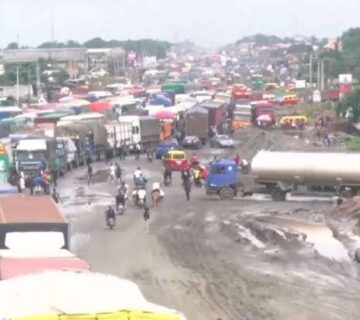
Many African cities are already struggling with inadequate infrastructure, fragmented development, poor connectivity and expensive living costs. The World Bank has described African cities as “crowded, disconnected and costly.” I don’t even need the World Bank here. I travel to my home state of Anambra and I see this happening at an alarming rate.
Now imagine adding hundreds of millions more people to those cities. Where will their food come from? Where will their water come from? How will they generate energy? How will they manage waste? What happens when a major disruption hits the systems that bring food and other essentials into our cities? And most importantly, will our people have the practical knowledge to cope?
This is where our education system needs a radical rethink, because it seems we are preparing children for yesterday while building a country for tomorrow.
Let us be honest. Some degrees and courses in our primary, secondary and university system have outlived their usefulness. Wipe them out. If a course no longer equips people to solve contemporary problems, create value, build industries or advance knowledge, why are we preserving it simply because it has always existed? We need the courage to overhaul the curriculum from primary school to university in the right way. It has to be revolutionary.
Agriculture should not mean memorising the definition of photosynthesis and sitting for an examination. Children should grow food. They should learn about seeds, herbs, soil, irrigation, food processing, preservation and storage.
They should understand all the mineral resources beneath the land on which they live, what they are, where they are found, how they can be responsibly exploited and how the environment can be protected.
Forestry should be practical. Technology should be practical. Environmental science should be practical. Food production should be practical. Renewable energy should be practical. Basic engineering should be practical.
Teach our children how to repair things. How to build things. How to preserve water. How to manage waste. How to grow food. How to use technology to solve local problems. Teach them our indigenous knowledge, including responsible study of herbal medicine, alongside modern science.
We should be educating problem-solvers, not examination-passers. At university level, every course should face a simple question: What problem does this degree prepare somebody to solve? We cannot continue producing thousands of secondary school leavers and graduates whose greatest ambition is to find one of the few available office jobs. We need people who can look at a problem and see an opportunity.
A young Nigerian should be able to graduate and say: I know how to grow this, process this, build this, repair this, develop this, invent this or improve this. That is how economies are built. And this brings me to something even bigger – we need to redefine what we mean by development.
Is development simply more concrete? Taller buildings? More cars? Bigger houses? Shopping malls? Imported goods? Endless consumption? More degrees? What if development also means that a community can feed itself? That it can generate energy. That it can manage its water. That it can protect its forests. That it understands its natural resources. That it can produce, repair and innovate. That when a crisis disrupts global supply chains or even local supply chains (the Middle Belt/core North farmers on my mind), it does not immediately become helpless.
A society that knows how to consume but does not know how to produce is not truly developed. It is dependent. The extraordinary urban growth ahead of us makes this conversation urgent. Nigeria, nay Africa still has a rare opportunity because so much of its future urban infrastructure has yet to be built. We can build cities that are productive, connected, resilient and sustainable, or we can simply allow population growth to outrun planning and infrastructure.
And Nigeria cannot prepare for that future with an education system designed for the past. So perhaps the question we should stop asking is – “what degree will get my child a job?” The better question is – “what knowledge and skills will enable my child to create value, solve problems, build industries and survive in the world we are actually entering?”
That is the education revolution Nigeria needs. Not more degrees for the sake of degrees.
Not more certificates for the sake of certificates. Knowledge. Skills. Production. Innovation. Self-reliance. It is time to wipe the slate clean, and start educating for the Nigeria we need, not the Nigeria we inherited.
Dr. Ikokwu aspires to serve Idemili North and South Federal Constituency of Anambra State in the House of Representatives.