Harrison EDEH
The Federal Government’s ₦321.26 billion electricity subsidy bill in the second quarter (Q2)of 2026 is exposing the Nigerian power sector to further risks of another legacy debts, Advocate Times findings have shown.
Tariff freeze by the power sector policy administrators and the subsequent subsidy payment highlights the growing fiscal risks of keeping consumer tariffs below the cost of supplying electricity, with the Nigerian Electricity Regulatory Commission (NERC) also warning that the current arrangement leaves the government exposed to unpredictable financial obligations.
The NERC reveals this in its 2026 Q2 Report, which evaluates the operational, grid, and commercial performance of the national power sector in compliance with the Electricity Act 2023.
An analysis of the report by the Advocate Times shows that the subsidy covered 49.60 per cent of the ₦647.72 billion wholesale electricity generation bill issued by generation companies (GenCos) during the quarter.
This means the government absorbed nearly half of the cost of producing the electricity supplied to distribution companies (DisCos), while the utilities were responsible for the remaining ₦326.46 billion under approved tariff arrangements.
The figures expose a central challenge in Nigeria’s electricity market, where the government is shielding consumers from the full cost of electricity, but the difference between the approved tariffs and the actual cost of supply continues to create a substantial financial obligation for public finances.
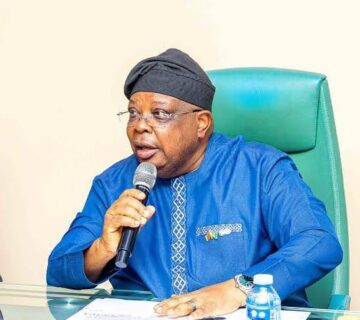
Few weeks back, there has been back and forth with policy makers over possible removal of the power subsidy, however,the Minister of Power,Joseph Tegbe informed that the government does not have plans to remove subsidy-a policy assurance statement that shows government will continue with subsidy till further notice.
“The current open-ended subsidy regime leaves the FGN exposed to indeterminate subsidy obligation because of volumetric risk and generation cost variation arising from changes in supply mix,” NERC stated.
AdvocateTimes reports that in February 2024,the International Monetary Fund (IMF) advised the administration of President Bola Ahmed Tinubu to phase out electricity subsidies bas part of measures aimed at reducing pressure on government finances.
The recommendation formed part of broader concerns of the country’s fiscal position and the financial burden associated with government subsidies which is visible with the difficulties witnessed in government’s settlement of legacy debts of over N4 trillion owed gas generating companies.
Lower subsidy bill does not mean lower tariff burden
The government’s subsidy obligation declined by ₦37.06 billion, or 10.34 per cent, from ₦358.32 billion in the first quarter of 2026. However, the reduction did not result from an increase in electricity tariffs or a fundamental change in the subsidy policy.
NERC attributed this decline mainly to a 3.40 per cent reduction in energy offtake by DisCos between the first and second quarters.
It stated, “The government subsidy accounted for 49.60% of the total GenCo invoice, which is a 2.35pp decrease compared to 2026/Q1, when the subsidy accounted for 51.95% of the total GenCo invoice. The primary driver of this reduction in FGN subsidy obligation is the decrease in energy offtake of the DisCos by 3.40% between 2026/Q1 and 2026/Q2.”
The quarterly figures also show that the subsidy obligation stood at ₦108.40 billion in April, rose to ₦112.93 billion in May and declined to ₦99.93 billion in June.
The government’s exposure remained substantial despite the quarter-on-quarter reduction, as its ₦321.26 billion contribution represented almost half of the wholesale generation bill, leaving public finances to absorb a significant portion of the cost of maintaining the existing tariff arrangement.
How the subsidy is paid
The subsidy operates through the DisCo Remittance Obligation (DRO) framework, which determines how much each distribution company must pay towards the cost of electricity supplied to it.
Under the current policy, consumer tariffs remain at the rates established in July 2024. However, the cost of supplying electricity has been affected by changes in inflation, exchange rates and gas prices. Where the approved consumer tariff does not cover the cost of generation, the government pays the difference.

According to NERC, “In the absence of cost-reflective tariffs, the Government undertakes to cover the resultant gap (between the cost-reflective and allowed tariff) in the form of tariff subsidies. For ease of administration, the subsidy is only applied to the generation cost payable by DisCos to NBET at source in the form of a DisCo’s Remittance Obligation (DRO).”
The Advocate Times reports that cost-reflective tariffs are electricity prices that reflect the cost of supplying power, while the allowed tariff, by contrast, is the amount consumers are permitted to pay under the existing regulatory arrangement.
When the allowed tariff falls below the cost of supply, the government covers the difference through the subsidy.
The framework is designed to prevent distribution companies from carrying the entire subsidy obligation as unpaid bills on their balance sheets. Rather than requiring them to pay the full generation cost and later seek reimbursement, the arrangement separates the portion they are expected to pay from the amount covered by the government.
“Under the DRO framework, NBET directly invoices the portion of GenCo costs not covered by DRO (tariff subsidy) to the Federal Ministry of Finance for immediate settlement,” NERC stated.
The Nigerian Bulk Electricity Trading Plc (NBET) is responsible for purchasing electricity from generation companies and managing the related wholesale payment arrangements.
Under the framework, it invoices the Federal Ministry of Finance for the portion of generation costs that the distribution companies are not required to pay because of the tariff subsidy.
This approach provides a mechanism for settling the difference between approved tariffs and generation costs. However, it also means the financial burden is transferred to the government rather than eliminated.
Yola, Kano and Kaduna show uneven dependence
The subsidy breakdown across the 11 distribution companies shows that government support varies considerably, both in monetary value and as a share of each company’s generation bill.
Ikeja DisCo received the largest subsidy allocation in absolute terms at ₦50.02 billion, representing 47.82 per cent of its ₦104.59 billion generation invoice. Abuja DisCo followed with ₦46.51 billion, while Ibadan DisCo received ₦40.95 billion.
Yola DisCo recorded the highest relative dependence on government support. The government covered ₦14.11 billion, or 83.19 per cent, of its ₦16.96 billion generation bill. This left the company with a DRO obligation of ₦2.85 billion.
Kano DisCo’s subsidy accounted for 61.32 per cent of its generation invoice, while Kaduna and Jos recorded subsidy shares of 57.97 per cent and 53.05 per cent, respectively.
At the other end, Benin DisCo had the lowest subsidy share at 41.12 per cent. The government covered ₦22.63 billion of its ₦55.03 billion generation invoice, leaving the company with a payment obligation of ₦32.40 billion.
Supply constraints add to the sector’s financial pressures
The subsidy challenge exists alongside persistent operational problems that limit the electricity sector’s ability to supply power efficiently.
NERC reported that the average plant availability factor for grid-connected power plants was 32.69 per cent in the second quarter.
The regulator said 67.31 per cent of total installed capacity across the 28 grid-connected plants was unavailable for dispatch at any given time during the quarter.
“In 2026/Q2, the average plant availability factor for all grid-connected plants was 32.69%, meaning that 67.31% of the total installed capacity across the twenty-eight (28) grid-connected power plants was unavailable for dispatch at any given time during the quarter,” it stated.
Gas supply limitations, mechanical breakdowns and routine outages were identified as reasons for the gap between installed capacity and available generation.
Average hourly generation also fell by 2.20 per cent quarter-on-quarter to 4,022.40 megawatt-hours per hour.
Transmission losses added another cost pressure, as the average transmission loss factor rose to 8.44 per cent, above the 7 per cent benchmark set under the 2026 Multi-Year Tariff Order.
The excess loss was estimated to have cost the Transmission Service Provider ₦13.54 billion.
Meanwhile, aggregate technical, commercial and collection losses across the distribution segment reached 36.23 per cent, exceeding the regulatory efficient-loss target of 16.92 per cent by 19.31 percentage points.
NERC further estimated that this gap translated into ₦129.07 billion in cumulative revenue losses for the DisCos.