Harrison EDEH
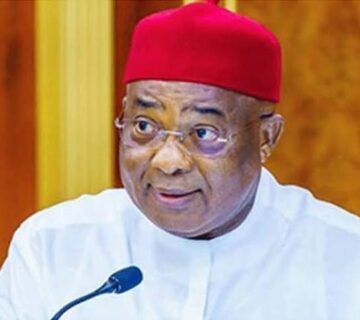
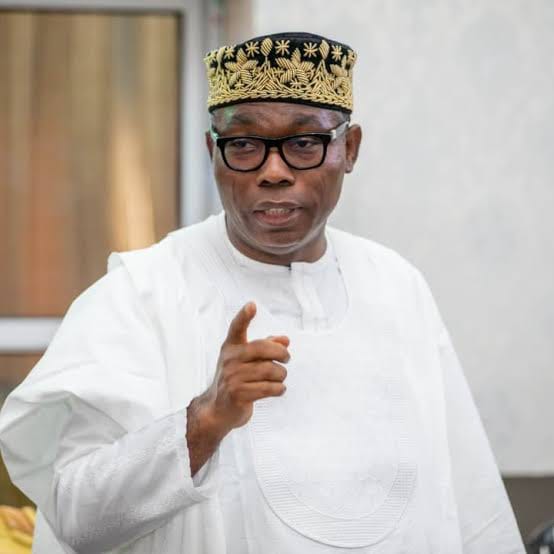
Amid concerns over his newly proposed price regime,Adewole Adebayo, presidential candidate of the Social Democratic Party (SDP), says he will reduce the prices of petrol, cooking gas and aviation fuel, also known as Jet A1, to N200 per litre if elected president in 2027.
Speaking in Abuja on Sunday, September 6,in an interview with NAN, Adebayo said the proposed pricing regime would be implemented within 12 months of taking office.
For a deregulated commodity whose price is largely determined by lots of factors as an international product, economic watchers are worried over Adowole’s proposed price regime following the unbundling of the peteoleum industry through the Peteoleum Industry Act (PIA)
Economic watchers say,Adewole would also require repealing the PIA which is an act of parliament signed into law on the subsidy removal before some of his proposed pricing regime could possibly work.
Advocate Times report lists crude oil benchmark,refining costs and margins,freight, shipping and insurance,foreign exchange rate,taxes,levies and regulations,supply,demand and geo-politics,(war, sanctions,OPEC cuts) as factors that determine petro pricing.
Amid these concerns,Adebayo further said his administration would revive Nigeria’s existing refineries and encourage the operation of modular refineries as part of the plan to reduce dependence on imported refined products.
The SDP candidate said the age of the country’s refineries should not be a barrier to their rehabilitation, noting that some refineries in the United States that are more than 100 years old are still operational.
“SDP will pick cooking gas, petrol and Jet A1; those three, we will put them under a regime where the price does not go past N200,” he said.
Adebayo said the proposed arrangement would also involve restoring what he described as the original subsidy regime, under which 450,000 barrels of crude oil are reserved for domestic consumption.
He said the crude oil would be refined locally, while products such as naphtha, heavy fuel oil, diesel and kerosene would be sold and the proceeds used to maintain the proposed price regime.
He said the SDP would work with the national assembly to establish the mechanism for applying revenue from the other petroleum derivatives to support the pricing arrangement.
Adebayo argued that Nigeria should be focusing on building sufficient domestic refining capacity instead of importing refined petroleum products at international prices.
He said the country already had two major advantages for achieving this — its crude oil resources and existing refining infrastructure.
The SDP presidential candidate said the subsidy debate had diverted attention from the more fundamental problems in Nigeria’s petroleum industry.
He also rejected the argument that removing petrol subsidy by itself would resolve the country’s fiscal problems, describing that position as a “red herring”.
Adebayo said Nigerians would not have to contend with petrol subsidy under an SDP government, arguing that subsidy should not be regarded as a government economic programme.
Beyond fuel prices, he proposed a transportation policy that would combine cheaper petroleum products with expanded public transport and rail services.
He said workers and students would be able to access public transportation using employment and student identification cards, while employers would contribute six percent of workers’ salaries towards transportation.
According to Adebayo, the measures would bring down transportation costs and stimulate economic activity.
He also proposed limiting housing costs to seven percent of workers’ salaries, alongside free education and healthcare.
“The summary of it is that transportation costs cannot go more than six percent of your salary and housing costs should not be more than seven percent of your salary, education and healthcare should be free,” he said.
Adebayo said agriculture and food security would also be priorities under his administration as part of efforts to make food more affordable.
Advocate Times reports that with the Petroleum Industry Act (PIA) signed into law,the petroleum sector is officially deregulated which has made the price volatile without a single individual having overall influence in it’s pricing.
Accordingly,the Nigerian Midstream and Downstream Petroleum Regulatory Authority has identified crude oil sourcing, single-source domestic refining, logistics and transportation costs among factors driving volatility in fuel pump prices.
Head of Public Affairs, NMDPRA, George Ene-Ita, made this known in an interview on Abuja on Sunday.
Ene-Ita described the issues surrounding continuous fuel price increases as knotty, adding that fuel prices had been completely deregulated and were, therefore, subject to market volatility.
He said the sourcing of crude oil as feedstock and the time lag between crude procurement and arrival at refineries were factored into product pricing.
According to him, marine and inland taxes associated with the movement and supply of petroleum products were also factored into the pricing.
“This issue is knotty in the sense that there are various factors involved.
“Pump price of petrol has been completely deregulated. And if this is the case, it also means that all volatilities associated with supply have to be factored in.