Ehime Alex
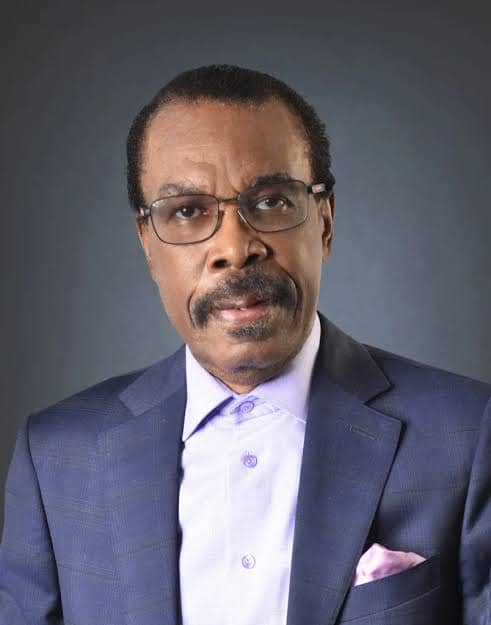
NIGERIA’S monetary policy easing could be delayed until after the January 2027 general elections, as election-related spending and fiscal expansion threaten to fuel inflation, according to Bismarck Rewane, chief executive officer of Financial Derivatives Company (FDC).
Rewane, who spoke at the Parthian Economic Summit on November 19, 2026, projected that the Central Bank of Nigeria (CBN) would maintain its restrictive monetary policy stance, keeping the Monetary Policy Rate (MPR) at 23 per cent through the end of 2026 before gradually cutting rates after the elections.
In his presentation titled “2027/2028: The Big Picture – Overwhelming Authority of Markets: Markets are Dominant, Policies are Recessive”, he said the easing cycle would depend on continued moderation in inflation over the medium term.
“The CBN is expected to keep the policy rate at 23% till end-2026,” Rewane said. “But projected to ease gradually after the January 2027 elections, supported by continued disinflation over the medium term.”
Under FDC’s baseline projection, the MPR would fall to 20 per cent by the end of 2027 and 18 per cent in 2028.
However, Rewane warned that increased government spending and campaign-related expenditure could raise demand-side inflationary pressures, threatening the expected decline in interest rates.
“Election-related spending and fiscal expansion could increase demand-side pressures,” he said.
He projected that inflation could rise to 17.32 per cent in 2027 under FDC’s downside scenario, compared with the baseline forecast of 14.39 per cent.
Such an increase could force the CBN to raise the MPR to 25 per cent in 2027 instead of cutting it to 20 per cent as projected under the baseline scenario.
Rewane also warned that political uncertainty and fiscal pressures surrounding the elections could weigh on economic growth.
“Election-related uncertainty, and fiscal pressures could constrain growth,” he said.
The Advocate Times can report that FDC’s baseline forecast puts Nigeria’s real gross domestic product growth at 3.8 per cent in 2027, down from 4.2 per cent projected for 2026. Under the downside scenario, growth could fall to between 3.0 and 3.4 per cent.
He added that policy changes after the elections could create further uncertainty for investors and financial markets.
“Post-election policy changes may heighten uncertainty,” Rewane said, adding that “Interest rates, inflation, currency stability and pre-election uncertainty will influence market direction.”
The presentation also identified rising debt-service costs as a major constraint on government finances, with debt service projected to absorb 57.1 per cent of government revenue in 2027, up from 44.9 per cent in 2025. The ratio is expected to increase further to 57.4 per cent in 2028.
The projected increase could leave the government with less revenue for infrastructure and other capital investments.
Rewane also highlighted external supply-chain risks, including higher global energy, fertiliser and freight costs, which could reverse the disinflation trend. Potential fertiliser shortages linked to disruptions around the Strait of Hormuz, alongside El Niño weather patterns, could put further pressure on food prices in late 2026 and early 2027.
Other risks identified in the presentation include inconsistent policy implementation, pressure on the naira, high borrowing costs and possible liquidity shifts in the stock market as large corporate listings and initial public offerings attract funds from existing equities.