Harrison EDEH
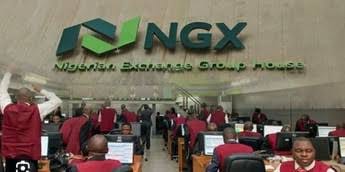
NIGERIA’s stock market ended August 2026 in negative territory as tighter liquidity and weakening investor participation weighed on the broader market, but a strong rally in banking stocks helped cushion the decline.
The NGX All-Share Index fell by 0.44 per cent during the month, closing at 244,199.39 points from 245,283.68 points it opened in August.
Advocate Times reports that the decline wiped 1,084.29 points off the benchmark index.
The market capitalisation also fell by about ₦587.07 billion, closing August at ₦157.74 trillion compared with ₦158.33 trillion at the beginning of the month.
The modest market correction came despite strong gains in the banking sector, where investors increasingly rotated into major financial stocks while several other sectors suffered steep losses.
The NGX banking index rose by 3.82 per cent during August, climbing from 2,527.59 points to 2,624.05 points. The NGX-AFR Bank Value Index also gained 2.64 per cent.
Access Holdings emerged as the strongest major banking performer, gaining 22.05 per cent during the month to close at ₦32.10 from ₦26.30. First Holdco followed with an 11.93 per cent gain to ₦145.00.
United Bank for Africa rose 6.40 per cent to ₦47.35, while Zenith Bank gained 3.12 per cent to ₦127.40. GTCO advanced 2.31 per cent to ₦133.00, while FCMB Group recorded a 2.18 per cent gain to close at ₦11.70.
The rally was not shared across the entire banking industry, as Ecobank Transnational Incorporated fell 16.81 per cent to ₦74.00, while Fidelity Bank declined 7.19 per cent and Sterling Financial Holdings slipped 1.88 per cent. Wema Bank and Unity Bank ended the month unchanged.
Trading activity within banking stocks strengthened despite a broader slowdown in market participation.
Banking sector deals increased by 13.77 per cent from 8,895 at the beginning of the month to 10,120 at the end of the month, while trading volume rose by 9.03 per cent to 106.68 million units.
Across the wider market, however, investor participation weakened. Aggregate trading volume fell by 35.73 per cent from 943.75 million units to 606.57 million units, while total deals also declined by 3.26 per cent to 54,581.
The divergence reflected a growing preference for liquid and large-cap stocks as investors became more cautious amid tight monetary conditions and high fixed-income yields.
The NGX MERI value index was the best-performing major index, rising 5.54 per cent, while the corporate governance index gained 3.47 per cent and the premium board index advanced 2.79 per cent.
Insurance stocks recorded the steepest sector decline, with the NGX insurance index falling 9.26 per cent. The consumer goods index dropped 7.35 per cent, while the growth index declined 6.72 per cent and the industrial index lost 2.03 per cent.
Among individual equities, Haldane McCall was the biggest gainer, rising 37.46 per cent. Access Holdings, Linkage Assurance, First Holdco and Transcorp Hotels also ranked among the month’s strongest performers.
Zichis Agro Allied Industries led the losers after falling 40.73 per cent, followed by Thomas Wyatt Nigeria, which dropped 37.21 per cent.
International Energy Insurance declined 32.05 per cent, while Critical Minerals Financing Corp and Royal Exchange also suffered heavy losses.
Large-cap stocks played a major role in determining the market’s overall direction.
Airtel Africa gained 8.59 per cent during the month, expanding its market capitalisation from ₦21.80 trillion to ₦23.68 trillion and helping prevent a deeper market correction.
Seplat Energy also rose 8.42 per cent to ₦12,320.60.
However, BUA Foods fell 10 per cent, erasing about ₦1.52 trillion in market value, while MTN Nigeria declined 3.58 per cent, cutting its market capitalisation by ₦629.87 billion. Dangote Cement remained unchanged at ₦1,034.00.
The August performance reflected what could be described as a turning point for the market.
While the broader exchange came under pressure from tighter liquidity and cautious investor sentiment, late-month buying in banking, oil and gas and value stocks helped stabilise the market.
Cowry Asset Management analysts said they expected the Nigerian equities market to maintain a cautiously positive outlook in the new week, supported by continued investor positioning in key sectors.
“We expect the Nigerian equities market to retain a cautiously positive bias in the coming week, with sentiment supported by continued positioning in the Banking, Oil & Gas and Commodity sectors,” the analysts said.
They added that Nigeria’s confirmed FTSE Russell reclassification could provide a medium-term boost to investor confidence ahead of the country’s return to the Frontier Market universe in September.
However, Cowry Asset Management warned that the market’s strong year-to-date performance and weakening participation could make investors increasingly selective.
“However, the market’s 55.06% YTD gain, alongside weak breadth and declining trading activity, suggests that investors are becoming more selective and increasingly sensitive to valuations,” the analysts said.
They said further market gains were likely to be concentrated in fundamentally stronger and relatively undervalued stocks.
“Accordingly, we expect the near-term market direction to remain positive but uneven, with further gains likely to be concentrated in fundamentally stronger and relatively undervalued counters,” Cowry Asset Management said.
“Overall, market performance is likely to remain mixed and selective, with investor focus tilted toward fundamentally strong stocks and attractive valuations.”
As September begins, the key question for investors will be whether the banking rally can extend its gains and help the broader market recover from August’s correction, despite continued pressure from high fixed-income yields, monetary tightening and weakening trading activity.